Pages

Sunday, July 26, 2015

On fighting back: Checklist vs strategic logic

I decided that I needed to write this because I am constantly reading or being asked questions that operate from a framework that completely misses my reasoning behind why I am not supporting the Sanders campaign.

---------------------------------------------------------------------------------------------

The checklist logic of supporting or not supporting a candidate


The question about whether or not to support a particular candidate and their campaign is a complex one, involving many possible logics. However, the lack of a discussion about goals and strategy and tactics among the populace, and even often on the left, has led to the reduction of this complex set of logics into the easily consumable logic of “I support candidate X because they are the best candidate out there” (ALSO: this logic often ignores other candidates which have better politics because they are not “realistically going to win”.)

This logic is the most common logic I find behind supporters of Bernie Sanders. Bernie is obviously to the left of all other Democratic Party candidates, and I would argue that his candidacy is only possible because of the amazing work done by Occupy and other movements that have made the left more visible and brought issues of inequality into the spotlight.

This rationale is behind the argument that is thrown at me or others on the Left who aren’t supporting Sanders when people caricature and misunderstand our argument and they say that we are “engaging in purity politics”. They argue that we are just standing on the sidelines doing nothing, waiting for the “perfect” candidate to arrive. This way of reframing the discussion and misrepresenting our argument makes us seem like we aren’t doing anything to further our cause and that we are being “impractical” and “immature”.

However, my reason for not supporting Sanders isn’t about having a checklist of qualities or positions on issues and then doing some kind of math to see if his candidacy passes a bar that I have set arbitrarily high. By only allowing the conversation to operate from the framework of “he is the best and most realistic to win” it brushes aside all other logics for why one might support a candidate/campaign.


Saturday, May 30, 2015

Eugenics rears its ugly head in DJUSD

--------------------------------------------------------------------------------------------------------------

Eugenics rears its ugly head in DJUSD


My son is in 6th grade at Birch Lane Elementary and right now they are doing a “parenting” unit. Part of this unit consists of the cutesy activity of carrying around a sack of flour for a week, as if it was a baby they had to take care of. Another part of this unit was for the students to figure out a budget, with the stated intention of showing them the cost of having a baby. However, the implicit lessons being taught were not about being a responsible parent, but rather were subtle ideological messages about the “undeserving” poor, about who should and should not be reproducing, and about the value of life. This is a lesson that seems to be taught across DJUSD for years now and not something isolated to my son’s class or school.


Tuesday, May 19, 2015

Subverting professionalism to challenge the neoliberalization of higher education


Recently, I had the pleasure of meeting the renowned labor sociologist Ruth Milkman at a luncheon in in my department. I got to speak about my research and was told I could ask Professor Milkman a question - it could be about anything I was told, public sociology, her research, whatever.

I thought about what I would ask her for quite some time and kept coming back to one conclusion: I had to ask about the neoliberalization of higher education and the fight to defend public education, and how we could best do that.

The idea of asking some clever question about methodology, or some feel good public sociology question felt like a betrayal of everything I stand for. Doing so would be a capitulation to the theater of academic culture - you know, when we pretend that we aren't on a sinking ship, and we talk about the possible futures of graduate students, as if the very future itself isn't sinking to the bottom of the ocean.


Wednesday, April 1, 2015

Response: Katehi's "Economic Impacts" article

UC Davis Chancellor Linda Katehi recently penned an article for the Davis Vanguard praising “The Economic Impact of UC Davis”. It came as no surprise to this working-poor Teaching Assistant, student parent, and activist fighting to defend public education and student and worker rights that much of the economic impacts of UC Davis were ignored, specifically the financial hardships faced by the workers who make the university run, and the students who the university is supposed to be serving.


Thursday, March 19, 2015

Education, Incorporated

Just wanted to share this excellent video made by a UCD student.

Also, I'm featured in it, so that's really cool too. ;)

https://vimeo.com/121801363


Education, Incorporated from Darin Reyes on Vimeo.

Monday, February 2, 2015

Response to Katehi's anti-divestment e-mail

As the time of publication this statement has not been endorsed by any organization or caucus, the views expressed represent only the views of the author. (Though hopefully the Davis UAW will be signing on to this statement soon.)

-----------------
On the morning of Friday January 30, Chancellor Katehi sent out an e-mail to the entire UCD community in regards to the previous night’s successful passing of a bill through the ASUCD senate that calls for the UC to divest its funds from companies that profit from human rights abuses in Occupied Palestine. We would like to deeply examine just what is being said in this letter and its implications.


Sunday, February 1, 2015

Condemning anti-Semitic hate speech @ UCD

I did not write this, but I did sign it. So I am putting it up on this blog for all to see because I think it is important for people to see that the Divestment movement condemns all forms of hate speech.
---------------------------------------

Dear UC Davis Community,
As a coalition of students and campus organizations at UC Davis, we condemn the actions taken sometime during the night of January 31st, 2015 by an unknown person(s) who defaced the Alpha Epsilon Pi fraternity house, which is a Jewish interest fraternity, with swastikas.
Just as we condemned the hanging of a noose, the defamation of the Palestinian dove, or calling students ‘terrorists’ based on their physical appearance or beliefs, we equally condemn the display of the swastika. This reminds us that anti-Semitism, along with all other forms of hate, including, but not limited to, Islamophobia, homophobia, transphobia, racism, and misogyny, still exist and are rampant trans-nationally and on our university campuses.
We reject any attempts to blame this on any single student community, including the UC Davis Divestment movement. We hope that the university investigates and exercises due diligence in holding those responsible for this hate crime to the fullest extent of the law.
Sincerely,
The Undersigned:
Students for Justice in Palestine at UC Davis
Muslim Student Association at UC Davis
Arab Student Union at UC Davis
Pakistani Student Association at UC Davis
Afghan Student Association at UC Davis
M.E.Ch.A. de UC Davis
Black Student Union at UC Davis
Sikh Cultural Association at UC Davis
S.M.A.R.T. (Students Matter: Activism, Retention, Teamwork) Coalition
Officers of the Davis Unit, UAW 2865
Hannah Kagen-Moore, Davis Unit UAW 2865
Duane Wright, Davis Unit UAW 2865
Mai Sartawi, National Lawyer’s Guild
Claire White, Student National Vice President, National Lawyer’s Guild
Gonzalo Cortes Moreno, Lawyer and Constitutional Law Professor (King Law School)
Armando Figueroa, ASUCD President

Tuesday, December 16, 2014

Clowns to the left of me, Jokers to the right

**The views represented in this post represent solely the views of the author, and not of the UAW 2865, the AWDU caucus, or the BDS caucus.

December 15, 2014 two hit pieces were published against our unions work. One was a Zionist rallying cry against the now coming tide of BDS resolutions in the labor movement that the author predicts our union will initiate (let's hope they're right!!). The other is a laughable rant by the former leadership who lost our union elections by a landslide. I think there's articles speak volumes about the successes of our union in the last year as much as it says about their authors. I want to take a moment to discuss both articles, both in correcting some some of the (many!) (deliberate) errors in the articles, and to talk about what they mean for us.


Saturday, December 6, 2014

Student papers on the recent UC fee hikes

In an earlier post, Email to my students about the fee hikes, I shared a communication of mine to my students of Soc 3 Social Problems. In it I asked my students to write:

... a brief reflection (2 paragraphs, less than 1 page) on the event to be passed in to me at our next section meeting, it will count as your grade for this week. This is a class on social problems, and we have been talking quite a bit about understanding how personal troubles relate to a larger social structure. Your reflection should introduce a social problem presented at this event (there will likely be more discussed than just fee hikes) and discuss how it connects to the way in which society is organized.


Here are anonymous selections from a couple of the response papers that I felt were really powerful, especially when read together:

"I myself pay for most of my tuition through financial aid and loans, and every now and then these loan companies send an email letting you know how much you have borrowed and if I have a plan for paying it back when I graduate. The amount of anxiety associated with knowing I'm going to have to find a full time job, (that probably doesn't apply to my major), straight out of college just to start paying these companies back is damaging to my overall performance in school. Why I feel this is such a big issue is because every student put in a massive amount of their own time in order to better themselves. Getting out of bed early for 8am labs, staying in the 24hr room all Saturday just to get a passing grade; and with this planned increase, all that effort could have been for nothing. It still bewilders me that they can take students that have struggled to this point to pay all their fees, and then tell, "I'm sorry, now you have to pay more. Oh, you paid for 3 years but you can't pay for your fourth and final year? Sorry you can't attend our school anymore."
-Student paper on the fee hikes


"According to my girlfriend, who works as a caterer for the campus and who has catered for the chancellor, tells me about overhearing the chancellor talk about spending and spending, and how they are the only ones who understand. All that talk, and while spending countless money on parties and gatherings, things that underprivileged and people who live in poverty cannot do. I find it impossible, and frankly ridiculous, to be understanding of the increase, knowing that it will severely affect myself and others in ways unimaginable, and even generations to come."
- student paper on the fee hikes


Sunday, November 23, 2014

Why Divestment is an Anti-Tuition Hikes Issue

This post will attempt to explain what divestment -- from Fossil Fuel companies, private prisons, and companies that profit off of the occupation of Palestine -- has to do with tuition hikes. I think there are numerous reasons for divestment (for example), and these aren't even the strongest. But I just wanted to illustrate how these issues are directly tied to tuition.


Briefly, the situation in the UC can be described like this: The state has significantly defunded higher education, and education more broadly. However, the UC administration has not prioritized education and research with its budget. Instead we have seen a massive explosion of full time administrators and skyrocketing executive pay. Yes the state needs to drastically increase funding, but the university needs to be restructured and spending on education needs to be a priority.


Fossil Fuel Divestment

Just a couple weeks ago I sat in a large auditorium with UC adminstrators engaging in a "dialog" about the proposed tuition hikes. A university lobbyist told us that it was unfortunate that the tax on gasoline was beaten, but that the big oil companies had just out lobbied and out-funded the university.

The sentiment and conclusion that they were hoping naive students would take away was that the well meaning university was fighting a battle with a big mean bully and it got beat, but it tried its hardest. 

The situation is actually much less heroic than that, and much more absurd. Because the university is run like a corporation, and growth is the main driving force of the UC it invests its endowment money in companies that make lots of money. Among these companies are fossil fuel companies. So the corporate model that is now our university has locked it into a situation where it is funding the very same companies that it is supposedly politically opposing. So the UC was spending money to lobby against a cause that was spending UC money to lobby. It was UC money vs. UC money. 

Big oil doesn't want to help pay for education, and so we are. 


Divestment from the Occupation

Companies are profiting from the illegal occupation of Palestine, and from human rights violations occurring because of this occupation. The state of Israel continually violates international law, yet is able to get away with it because it has the US backing it up -- and not just with moral support, but with billions of dollars every year in military aid. Israel is the biggest receiver of US foreign aid. 

UC money goes to companies that make bulldozers that demolish Palestinian homes to make land for illegal settlements, to security companies that help run prisons where human rights are violated, and more. So our money is coming into this situation in two ways, through our federal tax dollars, and through UC endowment money. All of this money could instead be used to fund education, but is instead being used to displace people from their land and their homes, to violate their rights, and take their natural resources.

So long as companies are making big bucks off of the occupation than they will continue to lobby the federal government to support the state of Israel, and as long as the state of Israel has the backing of the US the occupation will continue. By funding these companies UC money is going into a cycle which reproduces the occupation -- which means less federal funding for education.

More money for occupation means less federal grants, and more student loans instead. 


Divestment from Private Prisons


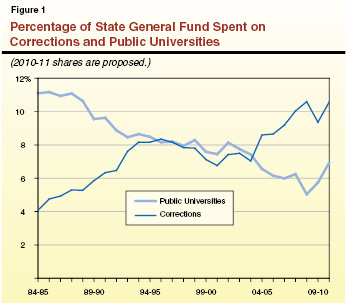
source: http://www.lao.ca.gov/reports/2010/edu/educ_prisons/web-images/SB_const%20amend_fmt.jpeg (if the graph doesn't appear then click this link)

This one is probably the easiest to understand. California has poured almost the same amount of money into prisons as it has taken out of public universities. 

In California about 10% of inmates are in private prisons. It is a booming industry, and it is one that lobbies for tough on crime laws to make sure that there is a demand for the "services" it provides.

Money that could be going to making education more affordable and accessible is going to prisons instead, and private prison companies are going to fight to keep it that way, their bottom-line depends on it.


Saturday, November 22, 2014

The Historical Moment at UC Davis - Strategies for Davis Activists

EDIT: updated to include two occupations I had forgot to mention in my late night tired as fuck rush to get this out after a hella busy week.

A brief history of the statewide UC student occupation and anti-fee hikes movements from 2009- present, with a focus on UC Davis

I wasn't here before Fall of 2011, that history is just what I have pieced together from comrades involved at that time during my years of activism at Davis, both in the Occupy UCD movement and as part of AWDU and an officer in UAW 2865.

In 2009, as part of a long trend of austerity in California and the US and the privatization of the UCs and higher education nationally, state funding to the UCs was cut by 12% and the UC Regents proposed to raise tuition 32%. Students responded with rallies, direct actions, and occupations of lawns and buildings. The fee hikes were approved by the Regents and in response the occupations and actions increased.

At UC Davis Mrak Hall is Occupied and 52 people are arrested - 51 students and 1 professor. In response to the arrests Mrak is occupied a second time and students negotiate with university administration for a letter to the district attorney asking that the D.A. consider dropping the charges. In March of 2010, students stage a walkout, shut down Unitrans buses, and around 500 students march to the I-80 to take the freeway but are blocked by the police and met with force. One student is taken by the police, beaten, tased, dragged and arrested. The police, and admin like Sheri Atkinson who continues to be part of the admin's Orwellian-named "Freedom of Expression Support Team", which watches and documents all student protest activity,  then use the student as a hostage and force the students to leave the area in return for the student-hostage to be released with no charges.

On November 17th, 2010, "Students rally and attempt to block a vote at UCSF, where Regents are voting to raise tuition eight percent and cut campus worker pensions. UCI’s police officer Kemper pulls a gun on student protesters."

In November of 2011, Occupy Davis is formed. On the ninth, UCBPD beat students and faculty with batons in the now nationally infamous instance of UC police burtality. Students at Davis responded days later with a rally and an occupation of Mrak Hall. The next day most of the Mrak occupiers and other protesters went to San Francisco, for what was originally going to be a protest of the UC Regents meeting, but the Regents canceled their meeting due to a supposed discovered "threat of violence", and joined with Occupy SF and marched around the financial district and eventually hundreds of people flooded Bank of America and temporarily occupied it, eventually around 100 people were arrested. Then on November 18th Chancellor Katehi told her staff to remove the protesters and the Occupy tents that had been erected on the quad and the now globally infamous pepper spray event took place, where Officer Pike attacked peacefully seated student protesters with pepper spray that UCDPD wasn't supposed to have and in a much closer distance than the spray is supposed to be used. Some students were arrested, and one of the arrestees was an art student whose hands were zip tied so tight that he received radial nerve damage. But the most important thing to remember from that day is that after Pike pepper sprayed the seated students that the entire crowd banned together and told the cops to leave the quad. The cops came, took down tents, arrested people, and attacked students with chemical weapons, but they left the situation having been beaten because we took control over our quad. The next day Chancellor Katehi was surrounded while giving a press conference and refused to come out to address the student who demanded answers from her. After hours of waiting and negotiations an agreement was reached where the Chancellor would be allowed to exit the building if she walked past students sitting next to each other. Students sat in total silence and her walk was a powerfully symbolic moment of the administration's and UCPD's guilt and reckless force juxtaposed by the students unbelievable self control. Two days in a row the admin or the UCPD walked away from a moment of confrontation on the losing end, we of course celebrated. Two days later, on a Monday, the biggest UCD General Assembly in history gathered (pic 1, pic 2), with an estimated 5,000 people. We then Occupied Dutton Hall for a week, as well as the quad which was now full of dozens of tents, and renamed it Paulo Freire Open university, where teach-ins were given.

Between the bad press from the police brutality at Berkeley, Davis, and UCLA, and the constant occupations and shutting down of the Regents meetings the proposed 81% tuition hike was withdrawn and a tuition freeze was enacted that has lasted up until now (Nov 20, 2014).


Thursday, November 20, 2014

Reflections on the UCD 11-18-14 Take Back Your Tuition Action

I want to start off this post by saying that while it will focus on a critique of the actions that have happened at Davis since the start of the Take Back Your Tuition movement, it is in no way a personal attack on anyone, and that leadership I am critiquing are my comrades and they have put in lots of hours and hard work into making Tuesday's rally one of the largest that happened statewide this week. I hope that they and others who are participating in this movement will read this and think critically about how to move forward in a way that makes our movement stronger and makes it grow. This is comradely criticism, I write because I see them as comrades. Notice that I never wrote comradely criticism to the reactionaries in the union, I merely wrote them off. I hope that the spirit of debate in the movement can be furthered by this discussion. Love and solidarity. -Duane

Strengths of the current leadership - ASUCD Office of Student Advocacy


The newly formed ASUCD Office of Student Advocacy has done an amazing job in using the resources and legitimacy of ASUCD to engage in grassroots organizing. The last time there was a student movement at Davis ASUCD was no where involved in this level of organizing and support. The night before the pepper spraying ASUCD passed a resolution, brought to them by Occupy UCDers, to support the occupation. That's as far as I think their involvement ever was, other than maybe some ASUCD people supporting it as individuals. This alone is a fantastic step in the right direction. Historically student governments tend to act more like company unions, but they are a contested terrain with potential to be part of the struggle. I think the Davis GSA is much closer to the company union type than ASUCD is currently acting as. The GSA board won't even come out with a statement against the tuition hikes. They sent out the following message in an email:

The GSA represents a wide variety of students who have diverging view points on the proposed tuition fee increases. I'd like to state for the record GSA supports grad and professional students' individual decisions regarding action on this issue. 

They go on to say that they will be bringing a resolution to the GSA assembly in their December 3rd meeting. It is a shame that they can't even show the leadership to oppose the tuition hikes even if the GSA then overturns the boards statement. As students affected by the hikes, and as instructors of undergrads facing these hikes the GSA should be standing up for accessible public education. So ASUCD, mainly through the Office of Student Advocacy has managed to not make itself politically irrelevant to the students it represents, unlike the GSA.


Sunday, November 16, 2014

Email to my students about fee hikes

Dear Students,

We will not be meeting for section at noon this week. Instead you all should go to the anti-fee hikes rally on the quad at the same time. You will write up a brief reflection (2 paragraphs, less than 1 page) on the event to be passed in to me at our next section meeting, it will count as your grade for this week. This is a class on social problems, and we have been talking quite a bit about understanding how personal troubles relate to a larger social structure. Your reflection should introduce a social problem presented at this event (there will likely be more discussed than just fee hikes) and discuss how it connects to the way in which society is organized.


(Facebook page for the event: https://www.facebook.com/events/1492534877694783/?ref_dashboard_filter=upcoming)


I cannot in good conscience as your teacher and as a fellow student hold section this week at the same time the anti-fee hikes rally is happening. Many of you may already be planning on attending and I don’t think a student should have to choose between fighting for accessible public education and getting an education. I don’t know any of you personally or your background or life story, but I have to consider that there may be some among you whose continued enrollment in the university is already tenuous due to the already high cost of a UC education, and the proposed fee hikes may be causing you stress as you may not be sure if you will be able to afford to finish your education, or if you will even be able to afford to be here next year. It is not good pedagogical practice on my part to not only ignore the possibility that you or one of your peers may find themselves unable to focus on their studies if they feel that it doesn’t matter anyway because they will not be able to afford to complete their degree, but to put up an obstacle by penalizing you for not coming to class because you chose to go to the rally. I also think that as a teacher at this university it is my obligation to be there to support you all, and to fight for accessible public education. I am also a parent and I hope that one day when my son grows up that he will be able to go to college, but that prospect is already looking dim. As it is right now, even though I am TAing the university doesn’t pay me enough for me and my kid to live in Davis so over 3 years of grad school I have had to take out $15,000 in loans just to pay rent-- and this is after being told when I was accepted to this program that I would be “fully funded”.

The Department of Education reports that public higher education tuition in California is the fastest rising in the country (US D. of E. report 6/12/12) and the cost of the UC has more than doubled since 2002 (Sacramento Bee, 1/24/2011). The cost of education has become so unbearable that students rely on huge loans to afford school, making student loan debt exceed credit card debt, now over a trillion dollars (Bloomberg, 3/22/12).

I encourage you all to read up on the particulars of the situation and discover where your tuition dollars are going. I have included some resources that I think provide a more nuanced understanding of the situation than the overly-simple and deceptive narrative of “we need to increase tuition because state funding has decreased”.

http://reclaimuc.blogspot.com/2014/11/they-want-to-raise-tuition-again.html

http://reclaimuc.blogspot.com/2014/11/the-state-funding-sleight-of-hand-some.html

http://www.sfchronicle.com/education/article/UC-resists-law-requiring-disclosure-of-5895688.php

http://reclaimuc.blogspot.com/2013/01/uc-administration-continues-to-grow.html


http://ucsa.org/action-alerts/sign-our-petition/


Sunday, October 19, 2014

Reflections on the Fall 2014 UAW 2865 Joint Council Meeting: Or How Zionism Stifles Union Democracy

The views expressed in this blog post reflect the views and opinions of the individual poster and not any organization he is affiliated with, including but not limited to the UAW 2865, the Joint Council, the AWDU caucus, the Anti-Oppression Committee, the BDS caucus, and more.
--------

Summary: 1. Zionism and labor law (which I guess I didn't mention labor law as much as I should have) can restrict union democracy and force us into practices which are overly formal  2. it is these root problems that we must blame, not AWDU or the e-board or the BDS caucus for the way the Fall JC was conducted and 3. asking (because I don't have an answer other than "fight!") how can we move forward democratizing the union when the obstacle is much bigger than for example just an admin caucus in power, but is social conditions far greater in scope than the UC?


Background on the UAW 2865 Joint Council Vote to Call for a Membership Vote to Join the BDS Movement

This summer, especially in light of the massacre in Gaza, my union, UC Student Workers Union UAW 2865 - which represents academic student employees across the entire UC system, voted to support the Boycott, Divestment, and Sanctions movement in solidarity with the Palestinian people and particularly in response to the call from Palestinian unions and civil society to engage in these actions to help stop human rights abuses and hopefully eventually bring justice and end the occupation of their land (and all that is implied with that - the system of apartheid or Jim Crow style 2nd class citizenship that Palestinians living in Israel must live with, the lack of a right of return to the millions of refugees who were cast out of their home by the Israeli military, the stealing of land and resources, and more). This vote was made by the Joint Council, the body of all elected officers, and which is the largest and most representative body in the union.


Tuesday, June 10, 2014

Using Game of Thrones to Explain What Makes an Argument Sociological

I am currently TAing for the Sociology of Labor. The students have had to pick a labor campaign from a list pre-approved by the instructor - OUR Walmart, Fast Food Forward, Northwestern University Football Players, AFSCME 3299 contract fight, UAW loss at Chatanooga TN, and the San Jose minimum wage ordinance.

Many of the students in the class haven't taken other sociology courses before, so they are new to "thinking sociologically". To be able to think sociologically they need to first understand what makes an argument a sociological one. Many of their attempts at a thesis have been more like op-eds, in favor or against the campaign they are studying. So I tried to think of another way to explain to them just what we are looking for from them.

This is what I came up with. This is my (full, unedited) email to my students:
---------------------------

So I've been getting lots of questions about the paper and I just had an idea pop into my head that might help some of you.

So some people are writing this paper like an op-ed, taking a pro- or anti- stance in regards to their campaign. However this is NOT what this paper should be. This paper is an analytical sociological piece explaining the movement. I just thought of what I hope is a good analogy to help you understand the difference.

Because I got so many positive comments on my Game of Thrones shirt earlier in the quarter I thought that many of you might get this analogy. 
Imagine a friend who hasn't read the books or seen the HBO show asked you to explain GoT to them. You would explain that there is this struggle between families over who will sit on the Iron Throne and rule the kingdoms of Westeros. You explain that there is always politiking and backstabbing and that no family's claim to the throne is ever totally secure. 
This is where it gets important.
You then wouldn't just explain who the Starks (or whatever family is your favorite) are and why they should rule Westeros. You might have 10 good reasons the Starks should rule, and 10 good reasons that other families shouldn't rule. However that doesn't necessarily explain HOW some families got to rule while others didn't.
Instead you would explain that some families have a legitimate claim (symbolic power) while others have had their legitimacy challenged (also a symbolic struggle) while others have formed alliances (associational power) and some have wealth and political power (structural power). You would explain the particular struggle that each family has engaged in, using these types of power (being concrete and citing examples of course!). By the time you were done your friend would have a good idea as to why a certain family ended up ruling or not, based on your description and analysis of their campaign and the types of power that they weilded.

Furthermore, you could even go so far as to "play monday morning quarterback" http://www.thefreedictionary.com/Monday+morning+quarterback 
You could talk about what a certain family did wrong to lose their chance at the throne (The Tully's just didn't build enough associational power!) or you could make claims about futile struggles (the Bolton's never had a chance! They don't have any structural or symbolic power and I would argue that those are the most important!) or you could make generalizations such as "while legitimacy (symbolic power) is important for a king to have, and structural power (such as political power and money) helps, ultimately through my analysis I will prove that associational power is the most important power in Westeros after analyzing the attempts (both successful and not) of a sample of 12 families over time who have tried to take the throne.

Well I hope that helps some of you, or at the very least you got a chuckle and called me a nerd for writing this...

Wednesday, April 30, 2014

There's more to union power than membership numbers

ABSTRACT:
This essay does argue:
- Membership numbers are only a single measurement of union power
- Solely focusing on membership numbers ignores the other ways of measuring union power
- Ignoring other measurements of union power traps unions into a 1-dimensional practice of union power that can be very misleading

This essay does NOT argue
- Membership numbers aren't important
- Let's not measure membership numbers
- Let's ignore membership numbers
- I don't want a powerful union


I wanted to write the above first in order to be upfront about the argument because I'm sure someone will troll/distort what I am going to say. That being said, let's get to the essay!
------------------------

Wednesday, April 23, 2014

UAW 2865 elections: AWDU and SWITCh

Once every three years the entire leadership of our union UAW 2865 is up for grabs, every single officer position is vacated. Three years ago a reform slate (AWDU) that was tired of top-down business unionism took power and promised to democratize the union and get involved in struggles for social justice and in defense of public education. Remnants of the old leadership has rebranded itself and is trying to make a come back.

The SWITCh slate is being run by the same group of top-down career-oriented  business unionists. Let's examine who the leadership is, what their ideas and strategy for the union are, and just how honest their campaigning is.

The SWITCh leadership

Three people are major players of the SWITCh leadership, Rob Ackermann (UCSB), John Gust (UCR), and Jason Struna (UCR). All three of them ran in 2011 as part of the USEJ caucus slate, but have since claimed that there is no USEJ. However, just like in the 2011 election they have rebranded themselves, this time they are going under the name SWITCh, Student Workers for Inclusive Transparent Change.


Saturday, April 19, 2014

Interview by Daniel Gutierrez

I recently was interviewed by Daniel Gutierrez, who publishes at Conjuncture Magazine and San Diego Free Press, for an article about the UAW 2865 contract negotiations. It was by far the most fun interview/conversation I've ever had and since only a small portion of it will make it into the article I thought it would be fantastic to publish the full interview here.

(DG is Daniel, DW is me.)
----------------------------

DG: What I'd like to know from you is your thoughts on AWDU's [Academic Worker’s for a Democratic Union] strategy. That is, building grassroots support, including what is normally seen as social issues into the labor realm and how this changes the way unions are normally seen.

DW: Well I see my role as challenging that framework that unions have established for years. By focusing on bread and butter issues only and by saying other issues should be dealt with by other groups allows the union to default to fighting for and from a working class straight white cis-man position and ignores the fact that women, people of color, LGBTQIA folks and others are workers too.

It is a weak model of organizing because it hides the connections between class oppression and other oppressions and therefore doesn't put forth a critical enough or correct analysis of the system we live under and if you analysis isn't correct how can you have the right strategy to win?

That’s why the old slogan "An injury to one is an injury to all" to be has to be any union’s starting point.

DG: This seems like a pretty radical departure from what unionism has come to be known for in the United States. It definitely seems like a much more critical, more much adapted analysis of a neoliberal reality, critiquing assumptions of equality, Am I right?

DW: Definitely. As we have seen union membership and power decline its painfully obvious that that model doesn’t work, you can't start from a position of exclusion and expect others to just get on board with the struggle and patiently wait for their turn for their issues to come up.

And I say painfully obvious because of the state of working class people in this country. Inequality is ridiculously high, unemployment, homelessness, the number of people in prison, the number of people deported and the families and communities that are torn apart because of it, and more. That is some pain.

DG: I recently was looking at labor history figures in the United States and the amount of strikes in the United States have declined dramatically since the 1980s. In fact, someone told me yesterday that only three strikes were registered last year. Yet, in less than six months the UAW under the leadership of AWDU has called two strikes. How effective has the strike been in the union's struggle?


Saturday, March 1, 2014

Why AWDU's model is winning contract negotiations

If you have not yet read my previous post about the struggle in the UAW 2865 between two models of unionism please check out "Why Paycheck First is an Anti-paycheck strategy".

Background of Intra-Union Politics

In the spring of 2011 a reform caucus going by Academic Workers for a Democratic Union (AWDU) took over the union, after seeing the union have no involvement in the UC student movement and building occupations of 2009 and 2010, and after a huge "No" vote was organized (that just barely lost) on a contract that many felt was a sell-out to university management. 

The former leadership, which has been pejoratively called the "admin caucus" because of their conciliatory attitude toward administration, during the election where AWDU formed to challenge them they called themselves USEJ (United for Social and Economic Justice), and since then they have relinquished all claims to their (very direct) ties to the old administration (including some of them being in the old leadership and others working very closely with the old leadership members who are now involved in Democratic Party politics to this day on their campus, and they claim "You keep calling us USEJ, we aren't USEJ!" and "we aren't a caucus, we are opposed to the caucus system" (despite the fact that they constantly vote in blocs). They also recently tried to form an anonymous front group called Paycheck First, complete with a laughable blog full of deliberate distortions that was basically only read by members of AWDU in their spare time looking for a laugh. For the sake of ease I will just refer to them as USEJ just because its easier when I reference them below. 

Since taking power AWDU has done much to make the union more democratic and is more active in social justice work. Campuses now have their own budgets so that they don't have to ask permission of the local President every time time they want a ream of paper for example (there will certainly be a post about this in the future, and at that time I will make sure to link to it here). Campus leaderships can now email their membership directly instead of submitting everything for approval to the President. Paid staff now make average TA salaries, not $50-80k. The examples go on and on, but the focus of this article is how AWDU has improved the bargaining process for new contracts.


 AWDU has improved and democratized the bargaining process

Previously, bargaining sessions were closed door, bargaining team only, events that members could only hear about second-hand. Under AWDU every single bargaining session has been open bargaining, meaning open to all UAW members, and allies and members of the campus community. As such members have been able to not just come and witness the bargaining process, but more importantly PARTICIPATE in the process. 

Previously bargaining began at the start of summer, when the vast majority of members aren't working and new agreements were reached typically before fall quarter started or during fall quarter. The previous contract was almost never allowed to expire. 

Any historian of labor will tell you that negotiating a contract when your members aren't working, and not having the ability to strike, is a guaranteed way of getting a terrible contract. This is why our pay hasn't kept up with inflation over the last 10 years.

This has to do directly with the view that one has of the negotiation process itself, and the bargaining room in particular. AWDU realizes that negotiations have to be backed up with real on-the-ground member power, and that that will only come about by having a strong participatory process. People will only fight for something when they feel ownership of it, not when they think someone else will get it for them. 

AWDU kicked off the contract campaign at the start of classes in the Fall. We invited members to come speak in the bargaining room about issues important to them. In this way, the bargaining room was not seen as a place where two small groups of advocates meet and try to come to a friendly agreement (read: the union conciliates and then pitches it as a victory to the members who were not involved and therefore have no way of judging what was possible and therefore if this was a win or a loss), this is why business unionism has lead to the decline of union membership in this country over the last 6 decades or so. The AWDU bargaining room was a place of mobilization. It was another arena in which we could use to mobilize members and through their participation get them more agitated and invested. We understood that we weren't going to come up with a clever argument to get a contract, that we were going to have to pressure management to give it to us, and that means building the mobilized member base. 

This means that bargaining team members had to see themselves primarily as organizers, and that we needed to invest our time organizing on the ground, NOT spend it all in the bargaining room by ourselves with management, as the USEJ bargaining team members suggested. One USEJ member, from UCSB actually proposed that we meet 4 days a week every week in September! Aside from being problematic because it meant that we would be guaranteed to be working more than double the hours we were paid for, but also that members with children (such as myself and both the members from UCSC) would just NOT be able to participate. The biggest problem is that it would have forced us to literally spend 200% of our time in the bargaining room, and no time organizing.